
The Five Behaviors™ Team Development
Transform how your intact and project teams collaborate, communicate, and deliver results with The Five Behaviors® model for teams



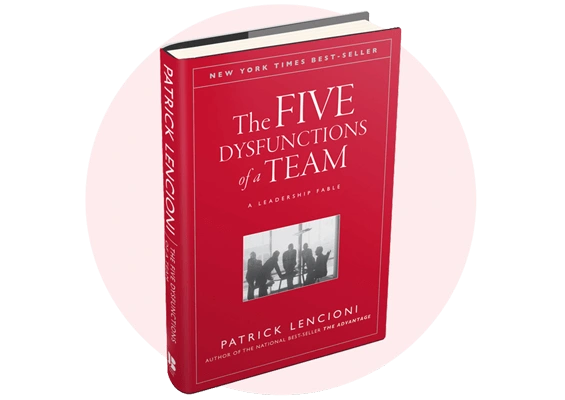
The Five Behaviors® of a Cohesive Team Development
The Five Behaviors® Team Development is a team-based learning experience designed to build the foundation of a cohesive team using The Five Behaviors® model for teams. It enables intact or project teams to develop the behaviors needed to overcome mistrust, fear of conflict, unclear commitments, avoidance of accountability, and siloed results.
Unlike generic team-building workshops, The Five Behaviors® Team Development delivers a structured, science-backed, and measurable approach to building high-performing teams.
This program helps teams:
- Understand how team behavior impacts performance
- Practice healthy conflict for faster, better decisions
- Build collective ownership and accountability
- Align and execute with speed and clarity
- Deliver shared outcomes as a cohesive team


What Makes The Five Behaviors® model for teams Unique?
Most team trainings focus on skills and activities. This program focuses on team behaviors, which shape performance.
Here is why The Five Behaviors® model for teams stands apart:
Behavior-First Development
Teams change how they work together, not just what they do.
Vulnerability-Based Trust
The only proven method to build real trust—where people feel safe to speak up, ask for help, and admit mistakes.
Healthy Conflict as an Advantage
Instead of avoiding conflict, teams learn to debate ideas productively to drive superior decisions.
Integrated with Everything DiSC®
Each member learns how their personality influences team culture, conflict, accountability, and results.
Data-Backed, Measured Progress
Teams receive pre- and post-program progress checks to track growth in cohesive team behaviors.
This is not a one-off team workshop—it’s a performance transformation system.
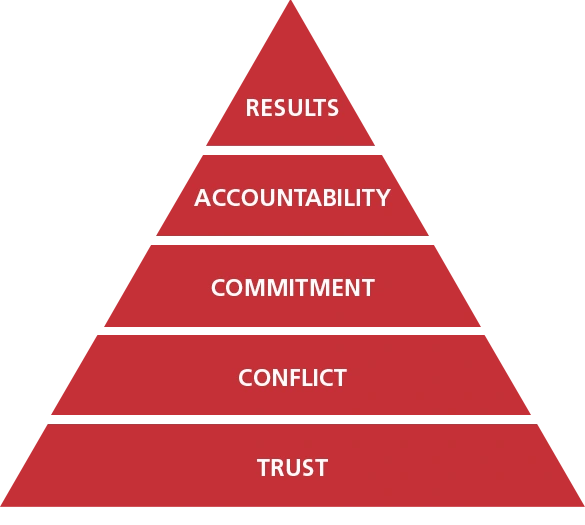
The Five Behaviors® model for teams — The 5 Core Behaviors
These are the five behaviors every cohesive team must master for sustained high performance:
Trust One Another
Teams build vulnerability-based trust, enabling honesty, openness, and psychological safety.
Engage in Healthy Conflict
With trust, teams debate ideas openly, challenge assumptions, and make stronger decisions faster.
Commit to Decisions
Teams align on decisions with clarity and buy-in, reducing confusion, resistance, and rework.
Hold One Another Accountable
Teams reinforce mutual ownership by holding peers accountable for behaviors and results—not waiting for managers to intervene.
Focus on Collective Results
Teams shift from siloed success to shared outcomes—because a cohesive team wins together, not individually.
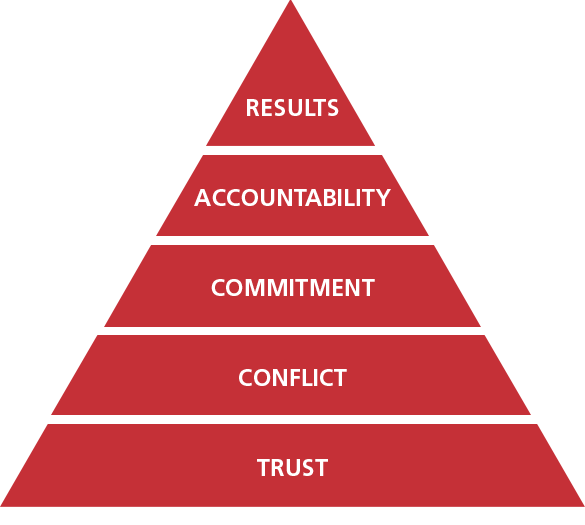
The Five Behavior® Model
Trust One Another
What does this program do?
Engage in Conflict Around Ideas
Commit to Decisions
Hold One Another Accountable
Focus on Achieving Collective Results
Business Impact for Leaders
HR Heads and L&D Leaders choose The Five Behaviors® model for teams because it solves the root causes of team dysfunction—behavior, not competency.
This program directly addresses the most common barriers L&D leaders face with intact & project teams:
- Improved key team performance metrics
- Higher collaboration and trust across functions
- Reduction in time lost to friction, misalignment, and rework
- Strong foundation for a high-performance culture
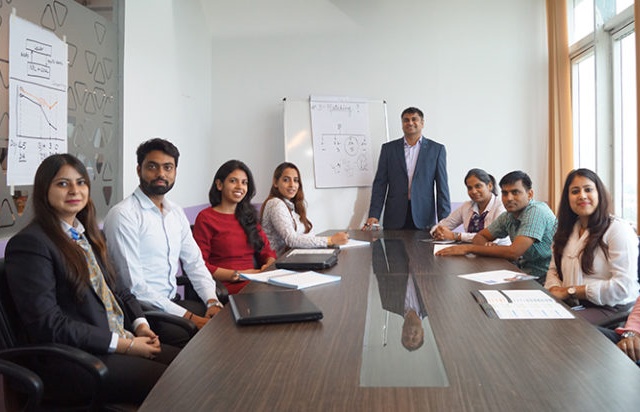
Business Impact for Leaders
HR Heads and L&D Leaders choose The Five Behaviors® model for teams because it solves the root causes of team dysfunction—behavior, not competency.
This program directly addresses the most common barriers L&D leaders face with intact & project teams:
- Improved key team performance metrics
- Higher collaboration and trust across functions
- Reduction in time lost to friction, misalignment, and rework
- Strong foundation for a high-performance culture

Choose your Delivery Options
Choose the format that fits your team:
- In-Person Team Intervention Workshops
- Virtual Instructor-Led Sessions for hybrid or cross-location teams
- Enterprise Rollout across multiple business units
- Train-the-Trainer (TTT) for internal L&D capability building
No matter the delivery style, the outcome remains the same: a cohesive team that performs and wins together.
Build a Cohesive Team That Wins Together
High-performing teams are not built through team-building games—they are built through intentional behavior change. The Five Behaviors® model for teams strengthens the mindset and behaviors that turn dysfunction into discipline and talent into performance.
If your teams are struggling with trust, alignment, accountability, or shared results, this intervention gives them the framework and tools to transform into a cohesive team that delivers consistently.

Connect With Us
Frequently asked questions
The Five Behaviors Team Development is an evidence-based solution for team development in intact and project teams. It helps a cohesive team in building trust, engaging in healthy conflict, committing to decisions, holding each other accountable, and focusing on collective results. It perfectly suits leadership, cross-functional, project, and business units that require a boost in their team culture and execution. This enables leaders and HR/L&D professionals to build a consistent and scalable approach to developing team effectiveness and aligning people to shared business outcomes by way of behavior change rooted in the five behaviors of cohesive teams.
The Five Behaviors® model provides a structured, behavioural framework that takes teams through five sequential behaviours affecting performance to become a strong cohesive team. It focuses on the behaviour of cohesive teams: Trust, Conflict, Commitment, Accountability, and Results. Working through these behaviours, teams learn to communicate openly, debate ideas productively, align around decisions, hold each other accountable, and put the needs of the team first over individual agendas. This makes sure the cohesive team is founded on a bedrock of vulnerability-based trust, not just tactical collaboration. Over time, The Five Behaviors® model changes team culture and equips leaders with a repeatable system to reinforce high-performance team habits.
The Five Behaviors Team Development experience helps every team, regardless of the mix of roles and responsibilities, learn to become more effective in accomplishing goals. Organisations who invest in the development of The Five Behaviors model ensure long-term behaviour change rather than a short-term team-building activity. Trust among their team members will deepen, issues will be resolved faster, friction will be reduced, and there will be alignment around shared goals; therefore, teams will become more cohesive and productive. Leaders begin to see higher accountability, better quality decision making, clarity in communication, and cross-functional collaboration when The five behaviours of cohesive teams become a part of everyday work. Ultimately, The Five Behaviors Team Development will create a culture where people take ownership, support each other, and focus on collective business success.
Most traditional team-building workshops offer one-shot events that maintain motivation only for the day but do not sustain behavior change. The Five Behaviors is a transformational development approach that generates a genuine cohesive team culture for sustainable influence and impact. The Five Behaviors of Cohesive Teams is a practical framework which equips teams to address root-cause behavioral barriers to performance. Instead of activities, inspirational exercises, or games, The Five Behaviors team development focuses on changing the mindset, trust-building, establishing communication norms, and accountability systems. The Five Behaviors Team Development is designed with insights, assessments, and action plans that ensure learning transforms into actual on-the-job change to help leaders build a robust cohesive team that sustains high performance.
Yes, The Five Behaviors Team Development can be tailored to the team's maturity, business challenges, and leadership level. If it is a newly formed team or an established senior leadership group, the program adapts to meet specific needs yet stays true to the foundation of The Five Behaviors model. Using diagnostics and team assessments, certified facilitators customize learning to create a cohesive team experience that resonates with the team's context. It would support global teams, hybrid teams, and cross-functional units through its flexible design. When The five behaviors of cohesive teams are part of leadership routines, large enterprises also see a stronger alignment, greater collaboration, and a resilient culture across business units. 6. How can HR and L&D leaders reinforce The five behavior of cohesive teams after the intervention? HR and L&D leaders are critical to sustaining the impact of The Five Behaviors® model beyond the workshop. Organizations should also build in behavioral checkpoints into performance conversations, team reviews, and leadership development journeys to keep teams cohesive. Leaders reinforce the five behaviors of cohesive teams through team charters, accountability practices, and trust-building rituals, supplemented by regular pulse surveys. Coaching, monthly team check-ins, and refresher sessions help many organizations preserve a high-trust, high-accountability culture. As these behaviors continue to be modeled and rewarded by the HR and L&D teams, they become habits in how the organization collaborates, performs, and grows.