The Five Dysfunctions of a Team Book — By Patrick Lencioni
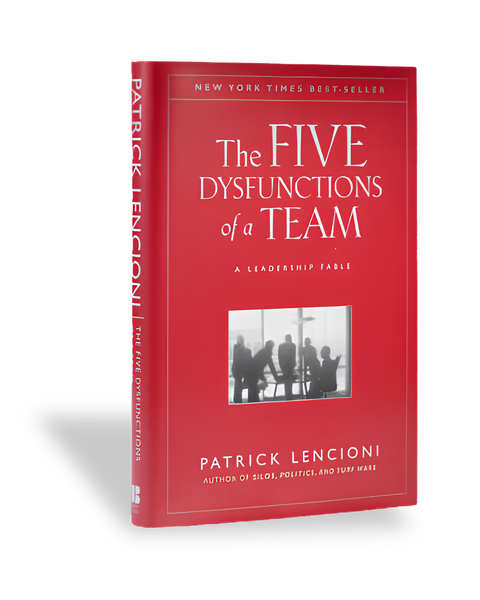
The five dysfunctions of a team book by Lencioni is the New York Times best-seller behind the Five Behaviors® model - explaining, in a practical leadership fable, exactly why teams break down.
The Five Dysfunctions of a Team Summary
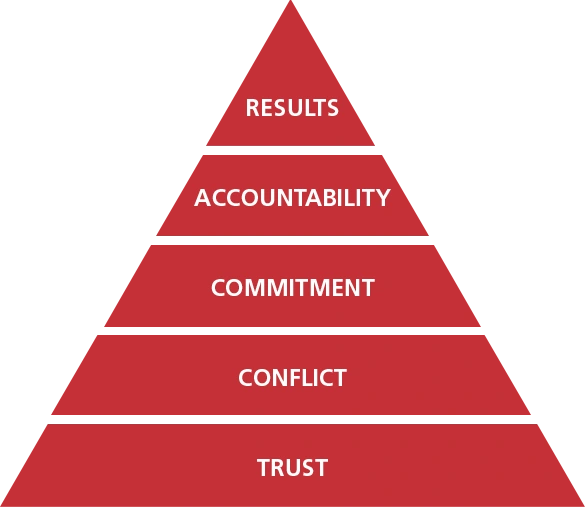
The five dysfunctions of a team book is Lencioni's leadership fable identifying five interdependent causes of team breakdown, absence of trust, fear of conflict, lack of commitment, avoidance of accountability, and inattention to results, stacked as a pyramid with trust at the base.
Told through the story of Kathryn Petersen, a new CEO trying to unite a talented but fractured executive team, the five dysfunctions of a team book lays out a leadership fable that has sold over 3.2 million copies and been translated into 30+ languages. Rather than academic theory, it gives HR and L&D leaders a recognisable, story-driven way to see dysfunction happening in their own teams, and a model to fix it.
As identified in the five dysfunctions of a team book, these are absence of trust, fear of conflict, lack of commitment, avoidance of accountability, and inattention to results. Each one builds on the one below it, which is why Lencioni presents them as a pyramid rather than a checklist.
The Lencioni Model: The Five Dysfunctions of a Team Pyramid
Lencioni's five dysfunctions of a team pyramid stacks trust at the base and results at the top, meaning weakness anywhere in the stack weakens everything above it. This is the same lencioni model that underpins BYLD's Five Behaviors® certification programme.
Absence of Trust
The fear of being vulnerable prevents team members from being open about mistakes and weaknesses with each other.
Fear of Conflict
The desire to preserve artificial harmony stifles the productive, ideological debate teams need to make good decisions.
Lack of Commitment
Without clarity or real buy-in, team members quietly disengage from decisions the moment they leave the room.
Avoidance of Accountability
To avoid interpersonal discomfort, team members stop calling out behaviours or performance that hurt the team.
Inattention to Results
Individual status and personal agendas take priority over the team's shared, collective outcomes, and performance suffers as a result.
About Patrick Lencioni

He is an American author and consultant, born around 1965, whose work focuses on business management, particularly team dynamics. He is the founder of The Table Group and one of the most widely read voices in organisational health and leadership today.
He is best known for the Patrick Lencioni 5 dysfunctions of a team framework, a popular business fable exploring why teams break down and how they can perform better. He has since written more than a dozen business books, including The Three Big Questions for a Frantic Family, all built on the same idea: teams don't fail because of strategy, they fail because of unresolved human dynamics.
His work is the direct foundation of the Five Behaviors® model that BYLD Group delivers across India as a Wiley-authorised partner.
Where to Get the Five Dysfunctions of a Team Book
The five dysfunctions of a team book is available through all major retailers. If you'd rather put the model into practice with your team than just read about it, BYLD Group's Five Behaviors® Team Assessment turns this exact framework into a facilitator-led, measurable programme for Indian teams.
Explore Team Development ProgrammesFrom book to practice: BYLD Group is a Wiley-authorised Five Behaviors® partner in India, turning this same pyramid into a certified, facilitator-led team development programme.
From the Book to Your Team
See how this five-part model translates into a facilitator-led programme for your organisation.
FAQs on the Five Dysfunctions of a Team Book
Everything you need to know about the book, the model, and how BYLD Group brings it to life for Indian teams.
As described in Patrick Lencioni's book, they are absence of trust, fear of conflict, lack of commitment, avoidance of accountability, and inattention to results , stacked as a pyramid with trust at the base.
The book was written by Patrick Lencioni, founder of The Table Group and a leading voice in organisational health. It was first published in 2002 and has sold more than 3.2 million copies.
The Patrick Lencioni 5 dysfunctions of a team framework, known simply as the Lencioni model, is based on five interdependent behaviours: trust, conflict, commitment, accountability, and results, first introduced in the five dysfunctions of a team book, and later formalised into the Five Behaviors® model used in team development programmes worldwide.
A five dysfunctions of a team summary is a good starting point, but the book's fable format is what makes the model memorable and applicable. For teams that want to actually apply it, BYLD's Five Behaviors® Team Assessment turns the summary into a structured, facilitator-led programme.
Yes. BYLD Group is a Wiley-authorised partner delivering the Five Behaviors® programme, built directly on this same pyramid, to HR and L&D teams across India.